What is it?
Nowadays, everyone has a mobile phone of some sort. In Australia the amount of mobile phones outweigh Australia’s population. However, mobile phones are also a way in which consumers can get scammed. There are several ways in which a mobile phone scam can appear as: ring tone scams, missed calls or text messages from unknown numbers, and SMS competition and trivia scams.
A ringtone scam consists of a deal in which someone could receive a free or cheap ringtone to attract a consumer. However, this deal leads to a subscription to a service which sends you a lot of ringtones in which one has to pay for. Also, the contract within this deal may be outrageous. Getting into this mess is the easy part. Getting out of the subscription is the tricky part. Scammers make it very difficult to stop the service. In some situations you have to pay a fee to break the contract.
Scams in which you get a large number of missed calls or text messages from unknown numbers aren’t just a nuisance but ways in which one could engage in a scam. Most people would call the unknown number which leads to a very expensive phone call as your phone call is transmitted to a premium rate service. In some situations this phone call could lead to a hundred dollar bill. Another way in which you could be scammed is by a receiving a message saying that you have won a prize and to retrieve the prize you have to call another number. You may not know that this phone call could lead to a premium rate phone call which is very costly. Usually the cost of the call outweighs the value of the prize. In text message scams, scammers use different ways to make you communicate to the text message. Replying to the text message leads to a costly bill which charges you more than the average text message and may charge you for receiving text messages.
A competition or trivia SMS provides a scammer an enjoyable and fun way in which to trap a consumer by. With the promise of a wanted prize (like money or a gadget) the consumer replies to the SMS. Usually, the price of the reply is expensive (maybe $4). The first few questions within the trivia is simple , however the last few questions leading up to the prize will be displayed as quite difficult.
What does it look like?
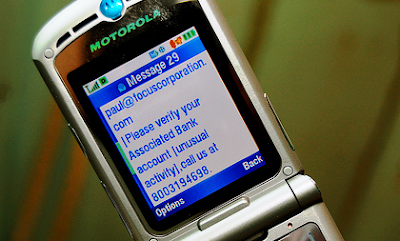
The 2 photos below shows a perfect example of mobile scams in the form of text messages. The first text message does not definitely say you have won but says 'you may have won'. Also, most competitions should communicate with the winner via phone rather than text. This also shows how this is a scam. The second text message is a scam as banks usually do not ask for verification of information via texts as texts may not get sent due to technical difficulties. Also, the text message should have stated what the unusual activity was but this text hasn't.
Mobile scams can appear in different ways. SMS competition and trivia scams could appear as a text message claiming you have won a prize like the one below. It could be a text message asking for your personal details or encouraging you to participate in a trivia thing. Usually in one of these, the terms and conditions seem invisible. Ring tone scams appear as a text message promoting a cheap or free ringtone. Usually the text message does not show the company the text is from, terms of conditions, how to stop receiving ringtones and the costs and hidden costs assosciated with the ringtone. Also, the number starts with 19 as this is the premium rate service number. A missed call and texts scam is evident when you get a numerous amount of missed calls by a number you dont know. Usually it starts with 190 since it is a premium rate service. However, you may not hear you phone ring although it says that you have had a missed call. Also, you can also get text messages from a number you don't know but it sounds like something a friend of yours would send (eg. Sup mate? Hows it going?).

How to prevent getting these scams?
To prevent trapping yourself from a ring tone, SMS competition and trivia scam:
1. Be able to tell whether it is a scam with common sense
2. Read the fine print of any deals
3.Have the knowledge of how to stop the service when desired
4.Watch out for phone numbers starting with 19
5. Ask yourself if it is to good to be true? - It usually always is
To prevent trapping yourself in a missed call or text scam:
1. Resist the urge to reply to any texts and calls from numbers you don't know
2. Be cautious of any phone numbers starting with 19 as they are usually premium rate services
We have Interviewed Paige who has fallen victim to a mobile phone scam.
Interviewer: What happened?
Paige: So I got a text and I didn’t know what it was. The text said text ‘stop’ back so I texted ‘stop’ but the text cost a lot, like $90, it stuffed up my phone and it wouldn’t stop.
Interviewer: Did you do anything about it?
Paige: I told my dad and called Vodafone since that was the service I used. We told them what was wrong but they kept saying it was our fault but my dad eventually persuaded them so we didn’t have to pay.
Interviewer: Do you regret it?
Paige: Yes, definitely.
Interviewer: What would you do if you could do it again?
Paige: I would have showed dad the text first and see what he did.
Interviewer: What would you tell people in the same situations as you?
Paige: Don’t text stop and call the service to ask them what to do.
